
ZONA MACO ART FAIR, MEXICO CITY FEB 4-8, 2026
BOOTH EJ23
ELISA MALO
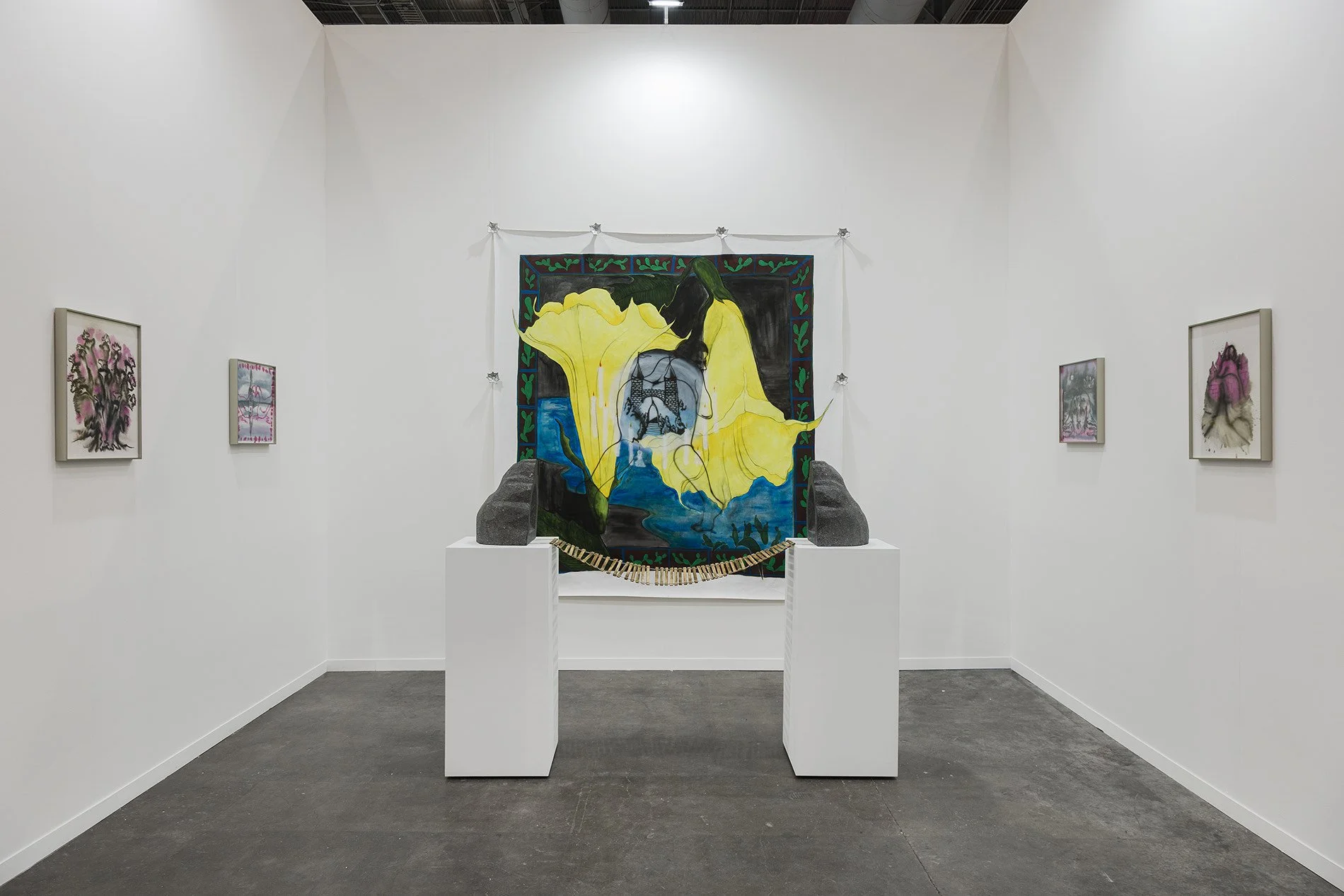
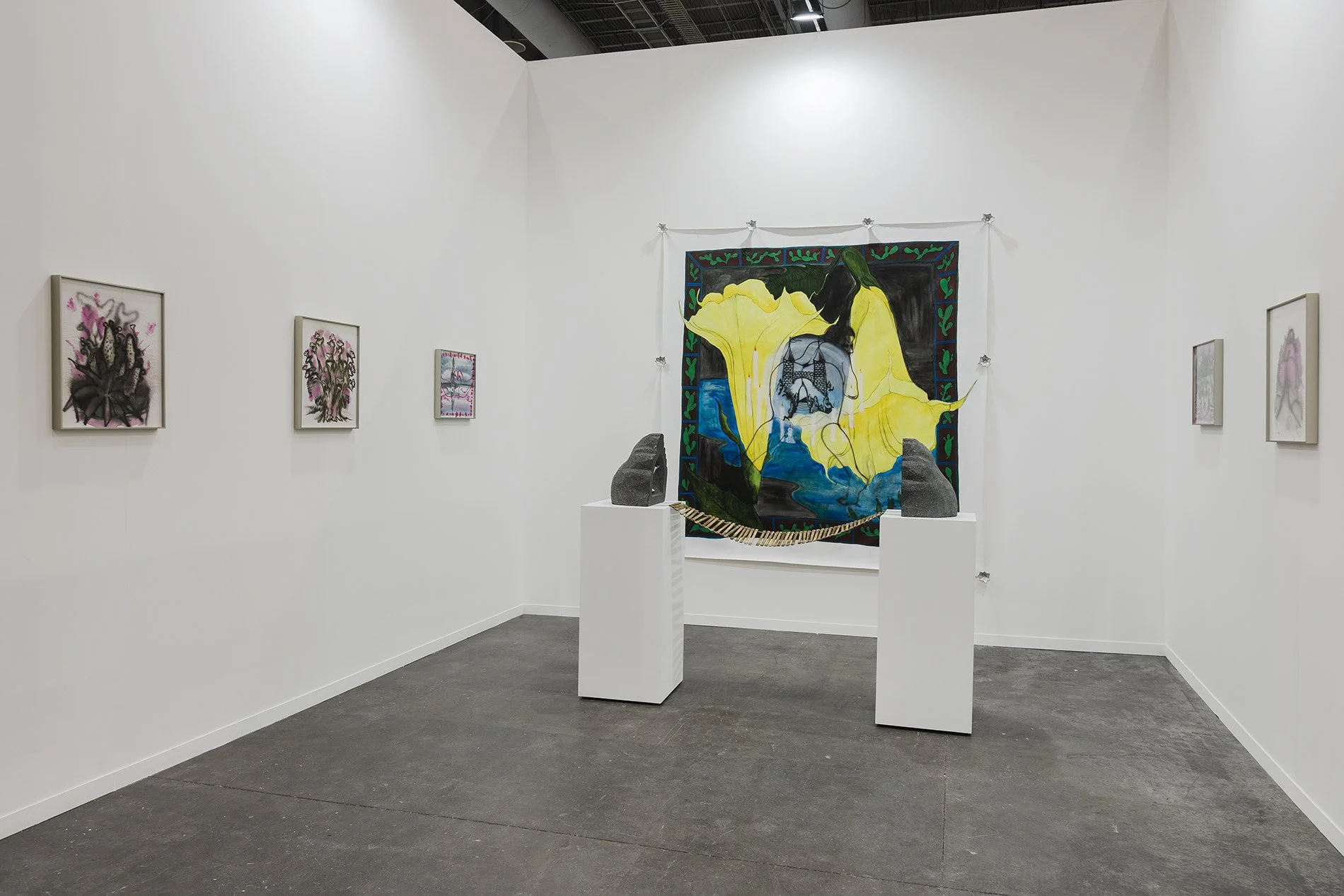
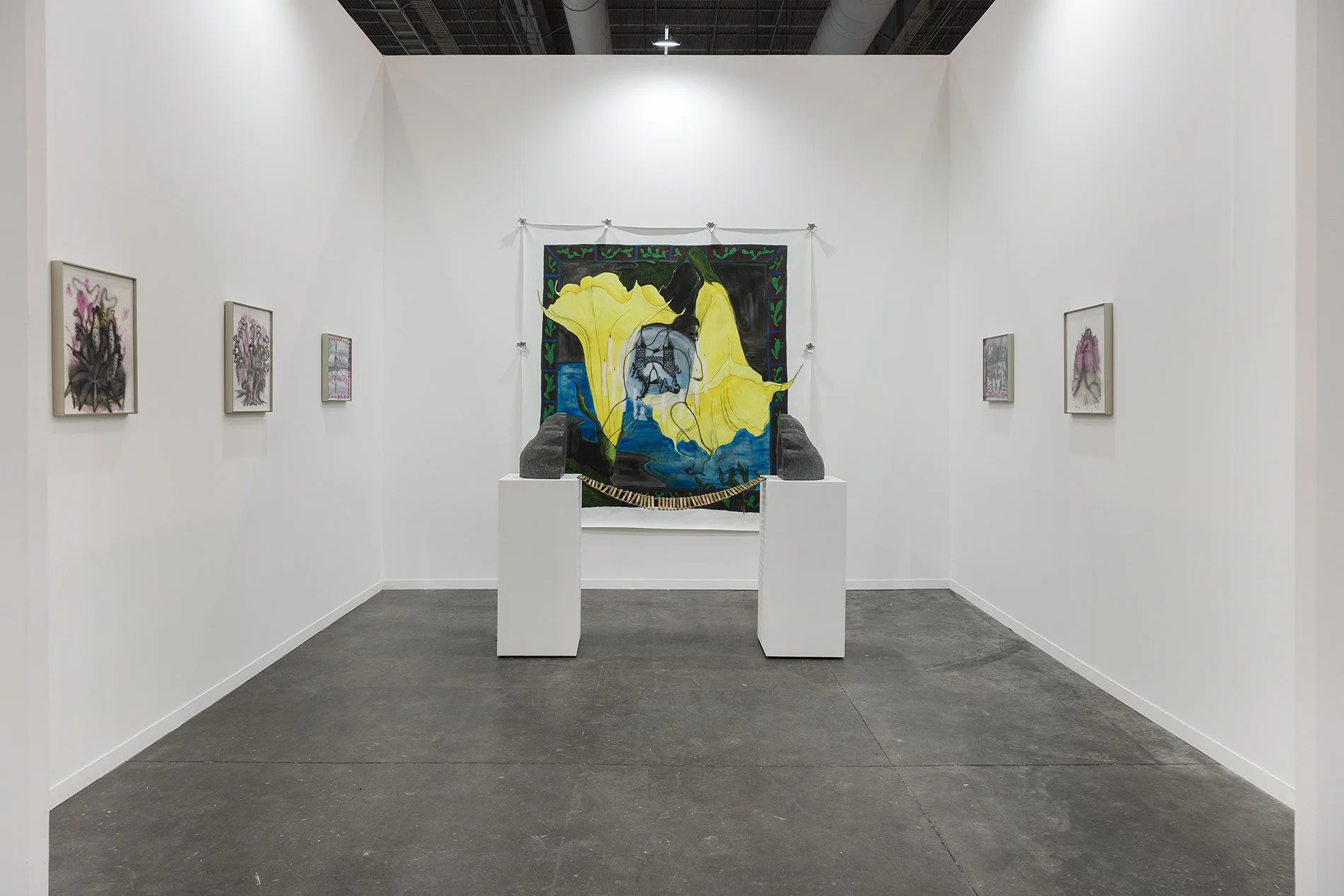
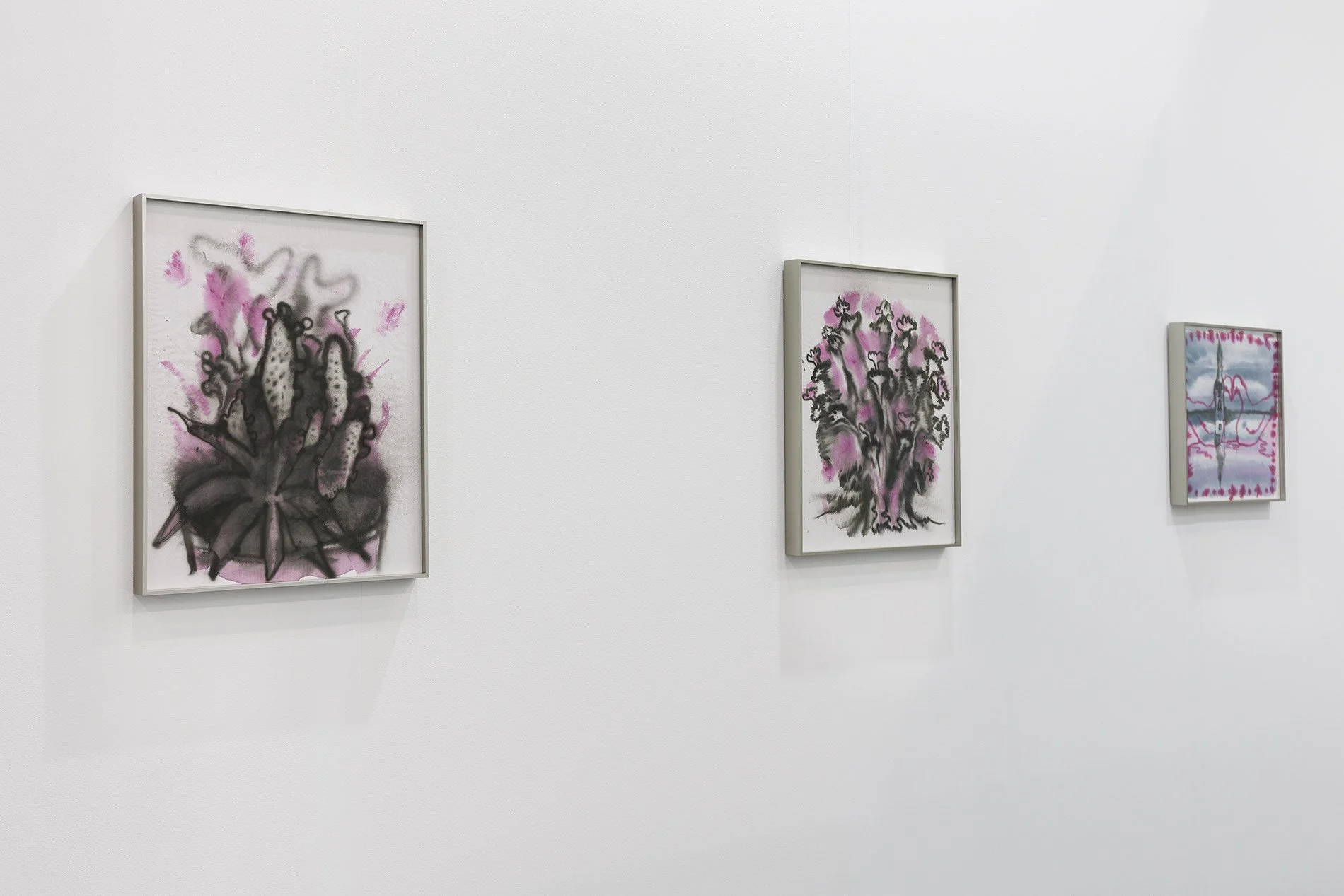
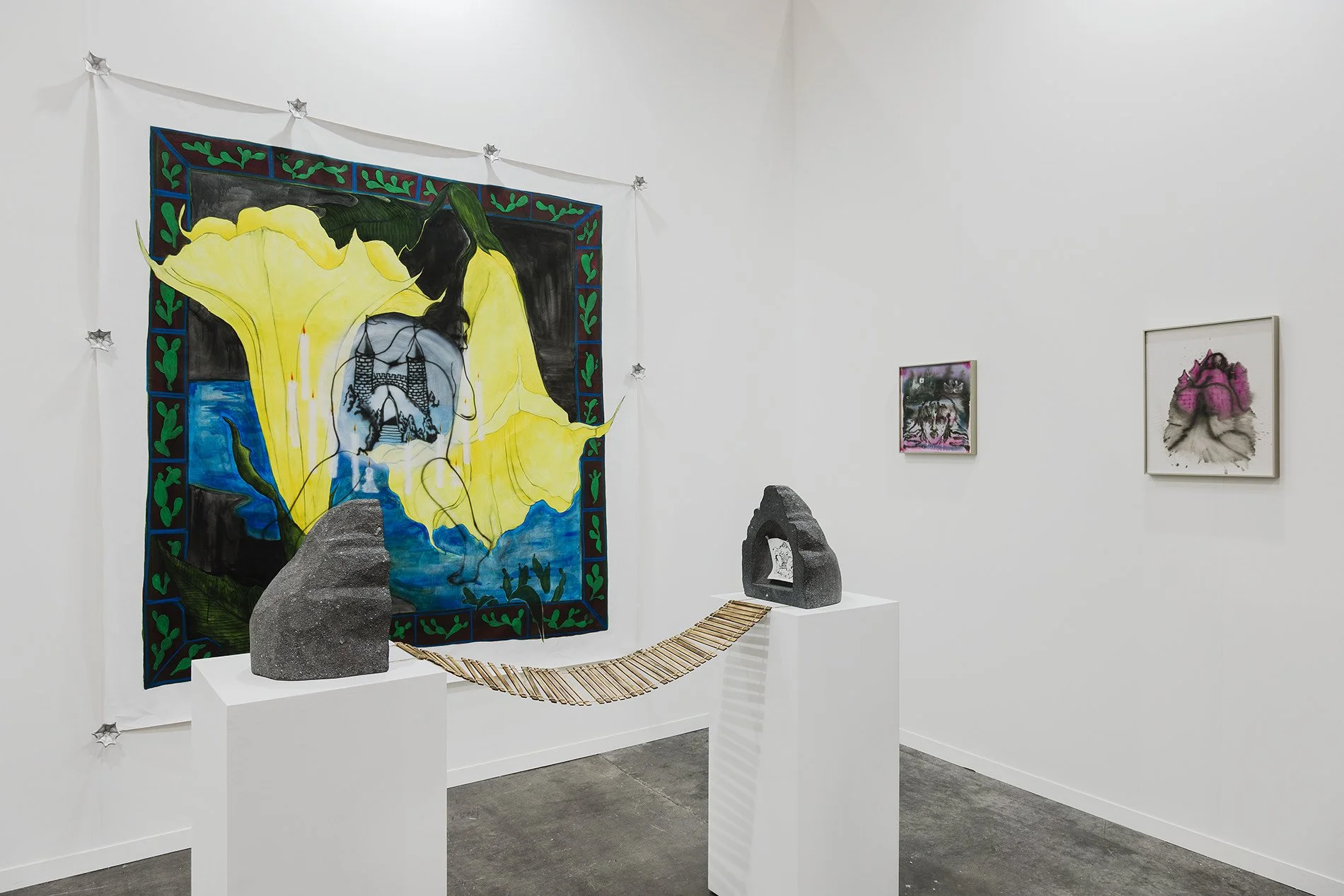
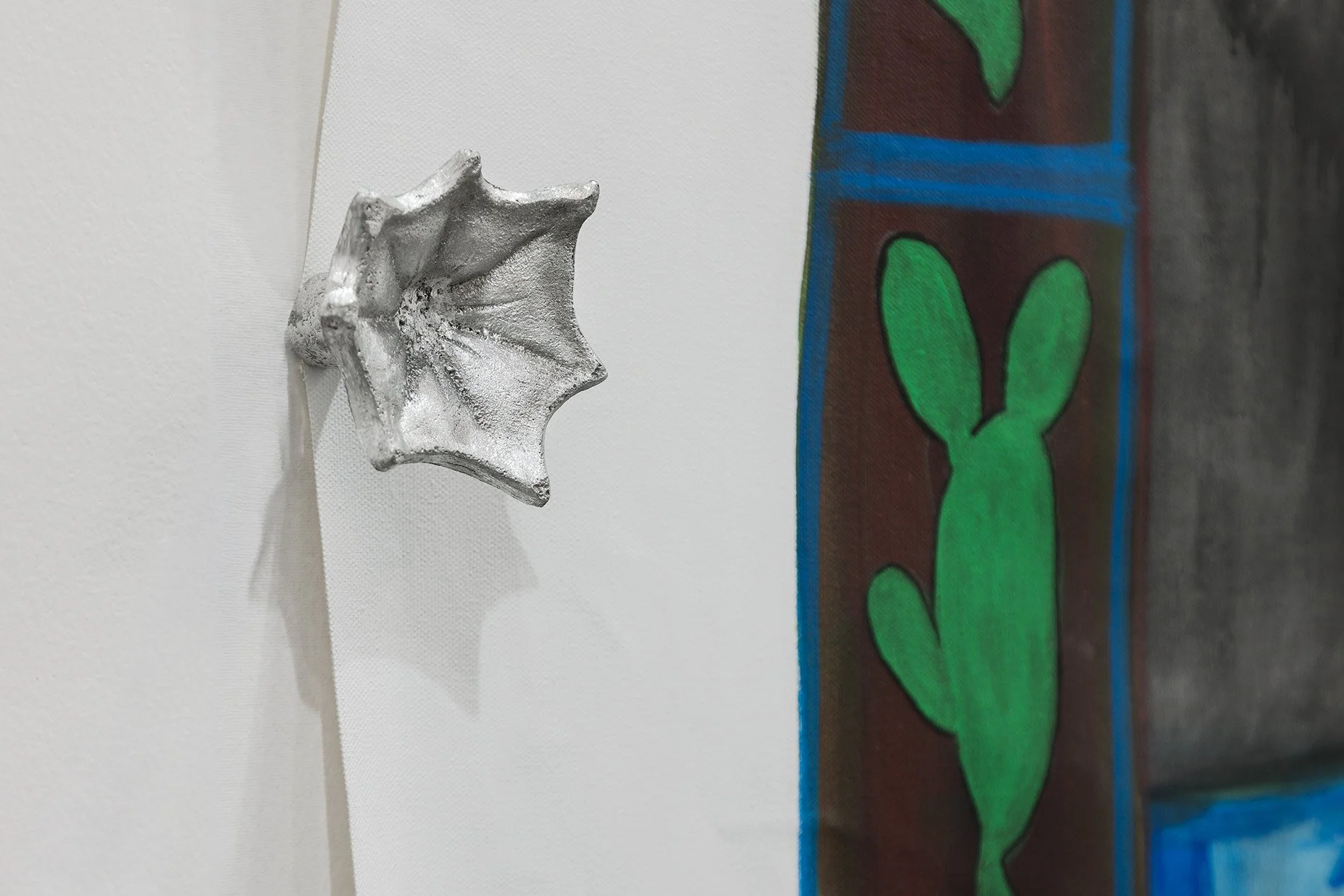
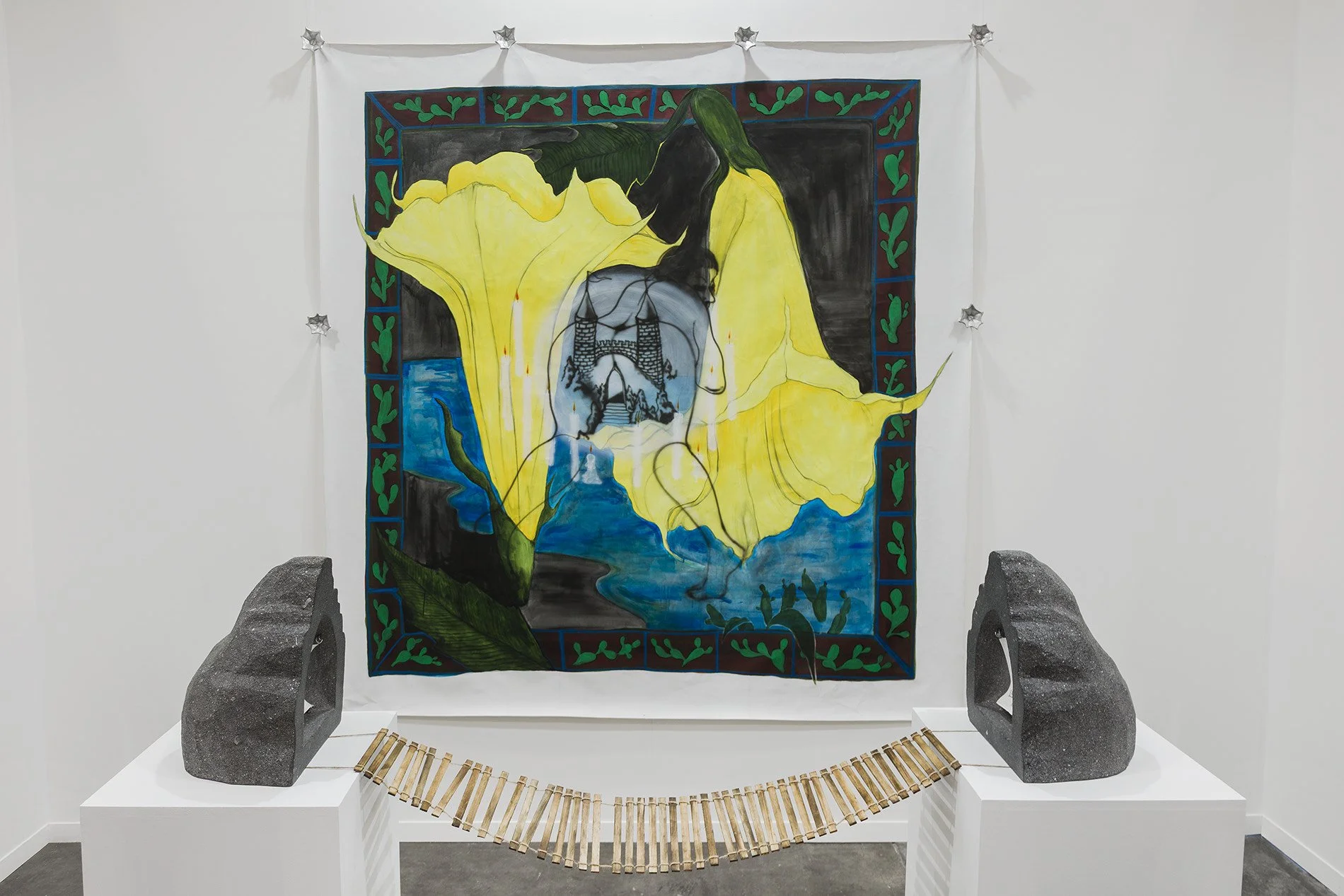
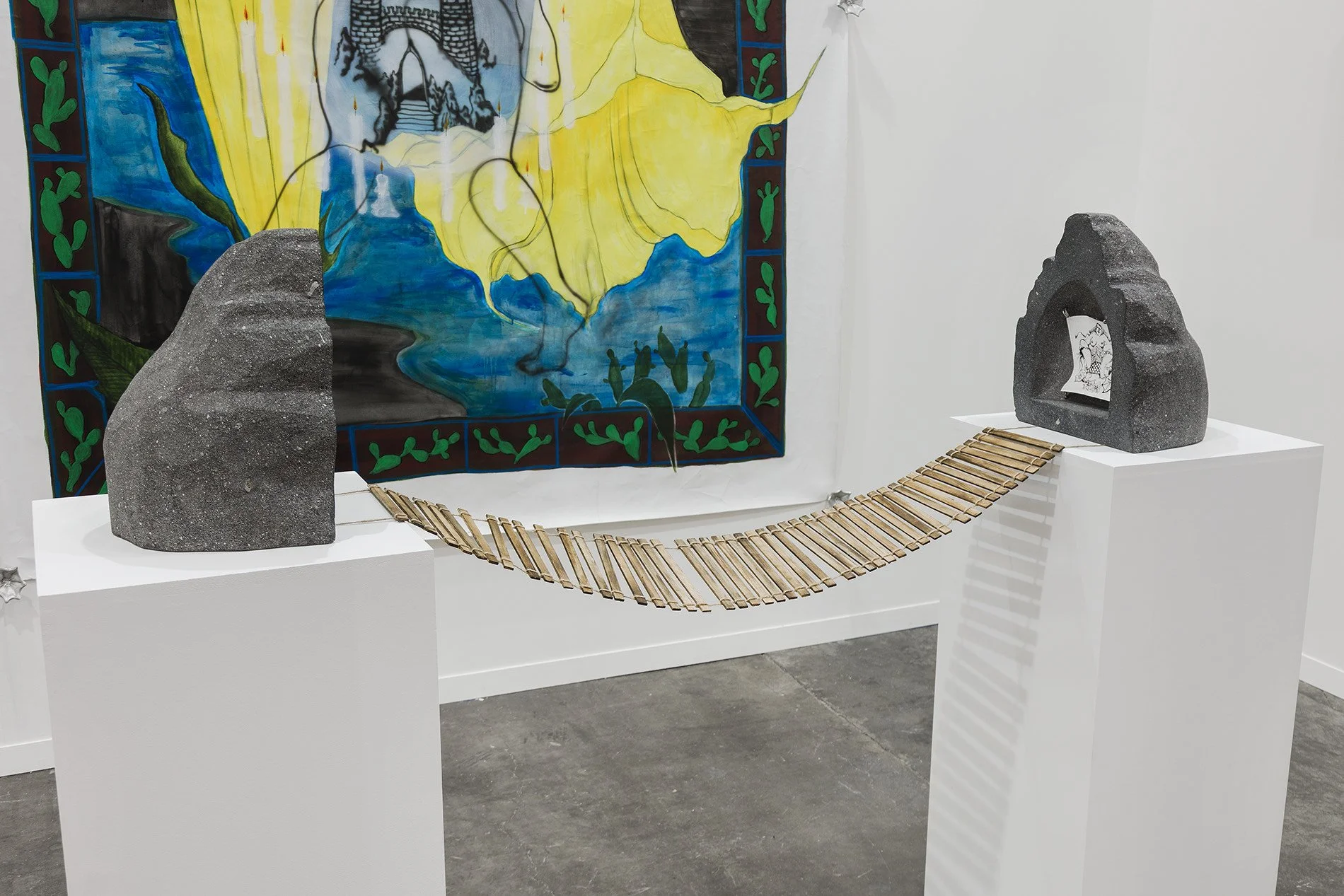
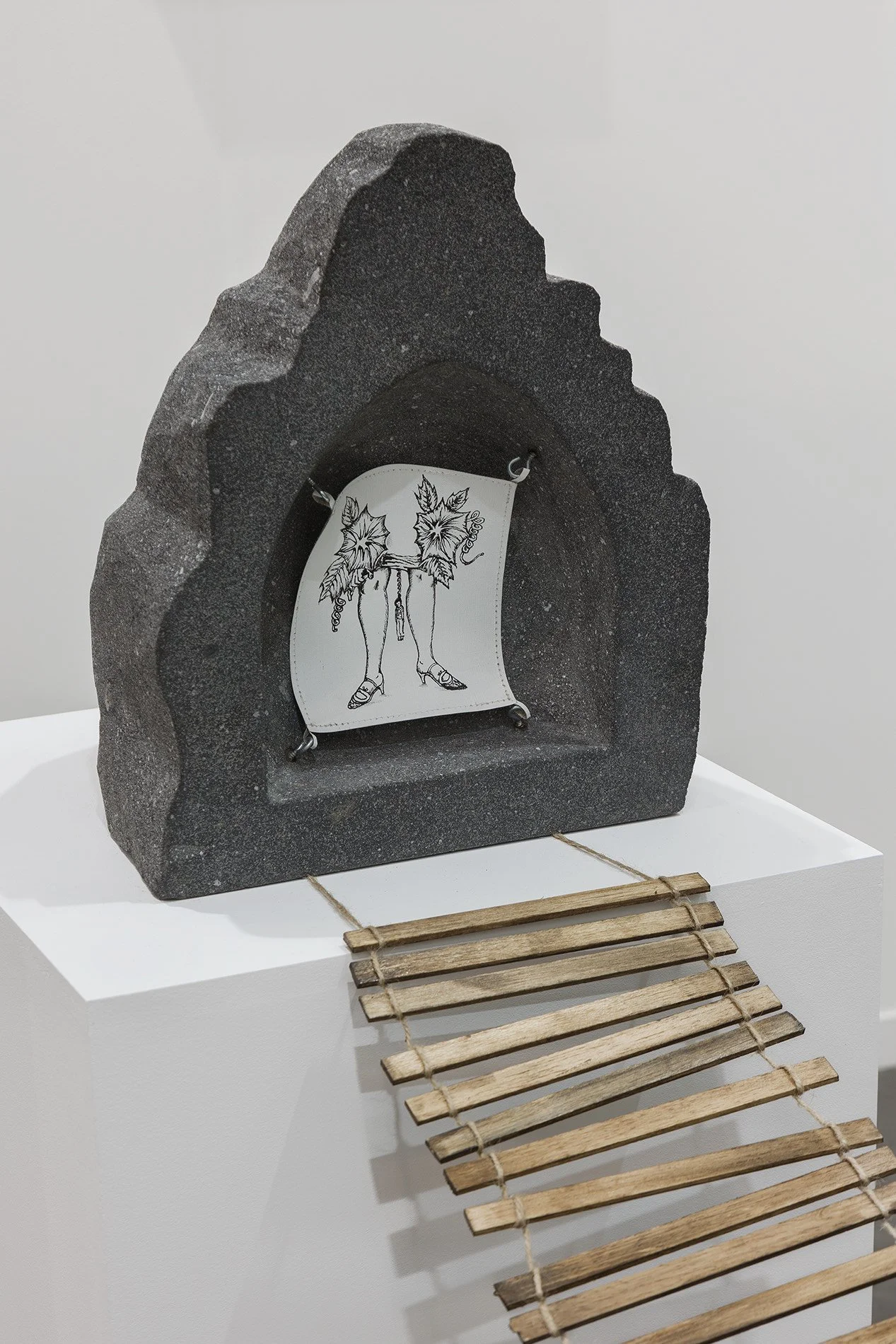
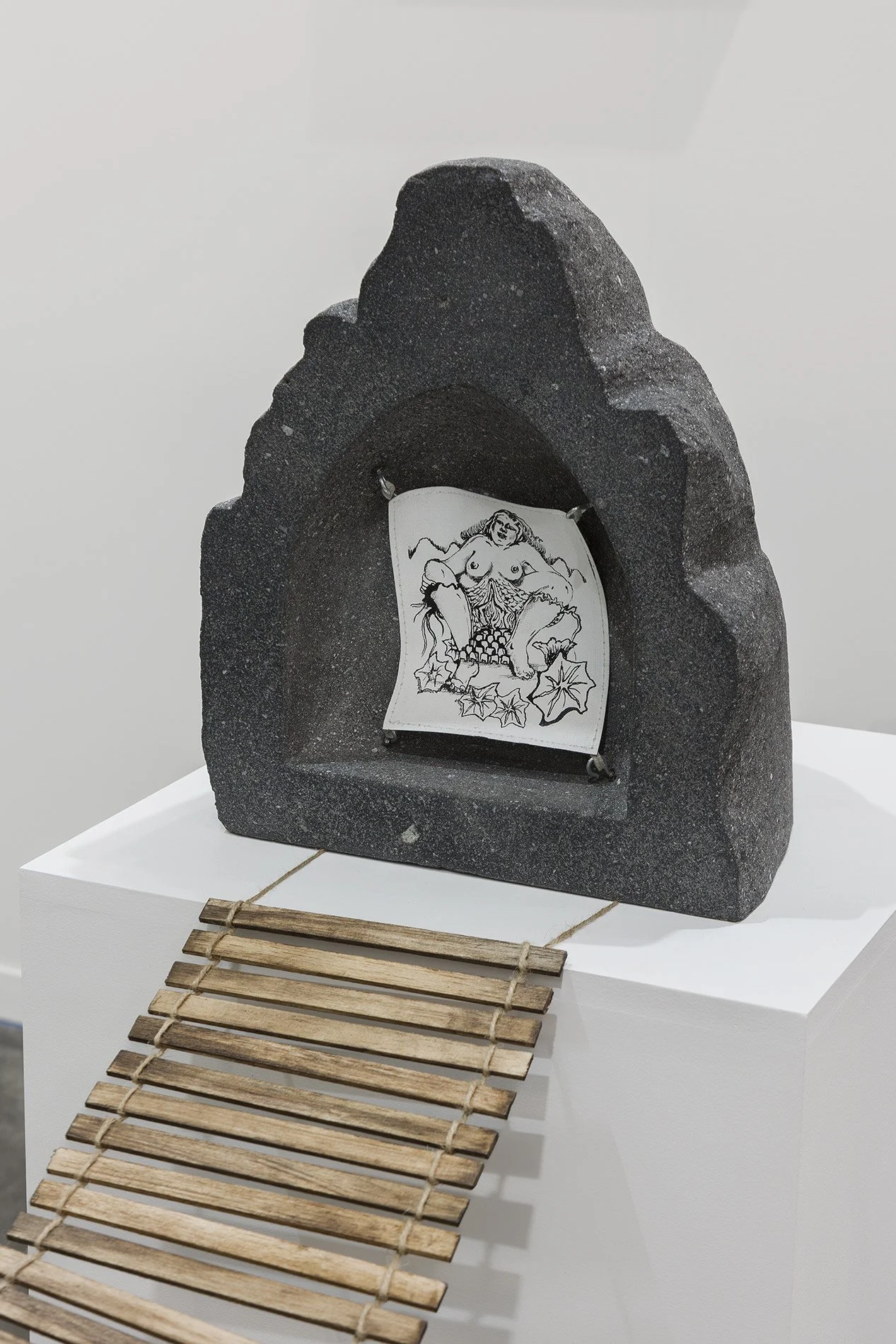
The Empty Circle (New York) presents a solo booth by Elisa Malo at ZONAMACO 2026. Bringing together monochromatic drawings, paintings, and sculptural elements, the booth presentation stages a direct conversation with works by French cartoonist Claude Favard, known as Bonnot (1937–2014), originally published in the satirical magazine Szpilki. Malo is drawn to the gestural, cartoon-like, almost surreal quality of his line, which echoes her own earliest ink-on-paper practice.
At the same time, Bonnot’s images, rooted in a leftist, politically critical imaginary, remain marked by the male gaze. Malo’s response is to enter into dialogue with his work. Through repetition, redrawing, and reconfiguration, she turns these images of women away from their original punchlines and toward the lived, bodily experience of women: the body as container, vessel, home. The booth frames this act of reclamation as an exchange across generations and geographies, asking how inherited images of women change when they are finally re-authored by a woman.
About the Artist
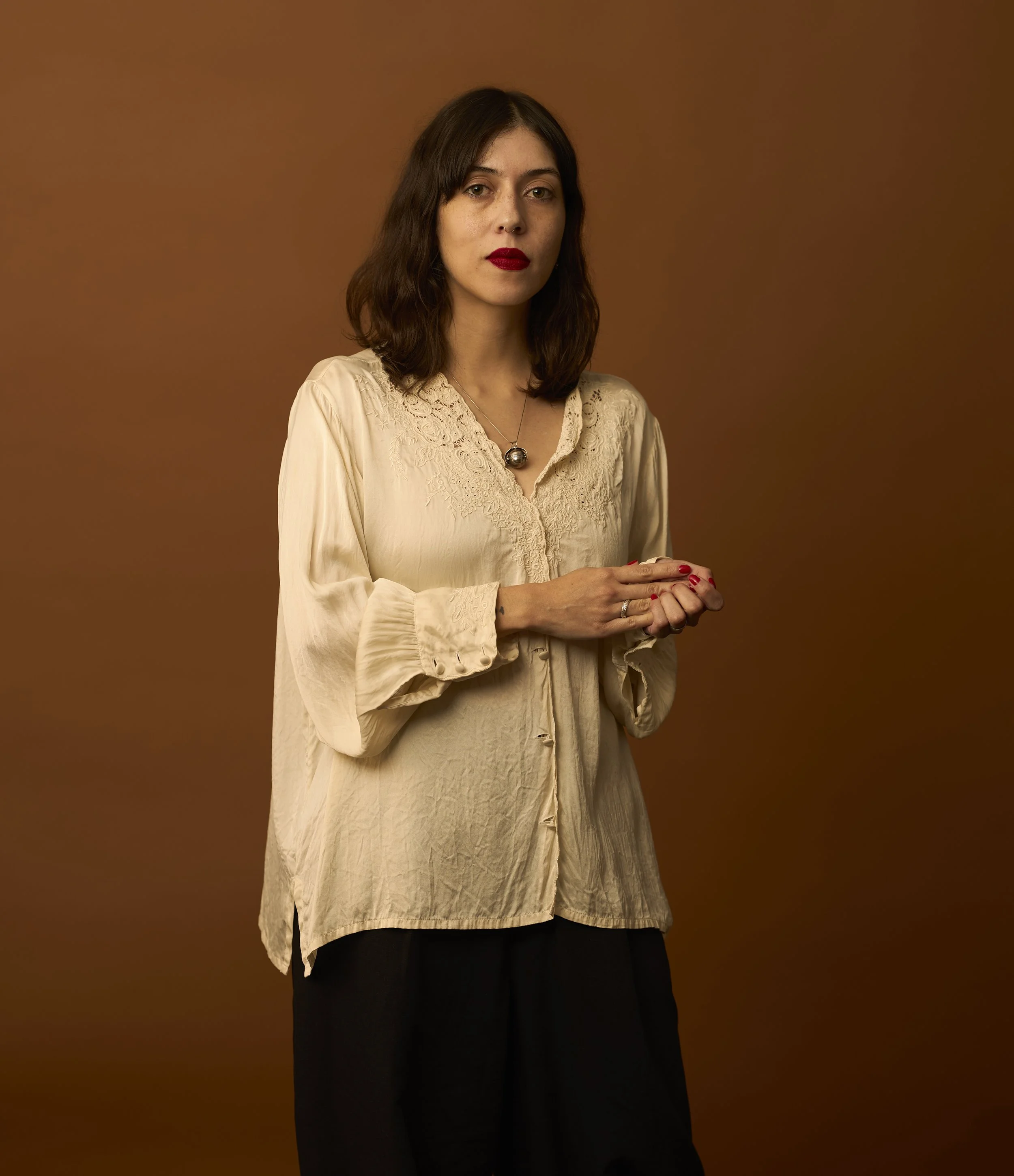
Elisa Malo (Xalapa, Mexico, 1989) is a visual artist based in Mexico City. She holds a degree from the National School of Painting, Sculpture and Printmaking “La Esmeralda” (2011) and was a participant in the SOMA Educational Program (2021). In 2009, she completed the Contemporary Photography Seminar at the Centro de la Imagen, where she developed the project Tiki Tiki, selected that same year for the FEMSA Biennial.
She has presented six solo exhibitions and has participated in group shows in Mexico, the United States, Costa Rica, Brazil, and Japan. In 2022, she was awarded an artist residency at HANGAR, Barcelona, and in 2024 received a grant from the PECDA Veracruz program. She is currently pursuing a Master’s degree in Visual Arts at UNAM, where she is developing a research-based project on dream space.
Her practice focuses on the exploration of oneiric space and the representation of the intangible. Through drawing and painting, and in interspecies collaboration with the plant Calea zacatechichi, she researches how to translate the experience of dreaming into this reality. The body functions as a gestational space from which an imaginary emerges—one that bridges the visible and the invisible. Her work seeks to activate a shared dimension, operating as a threshold between wakefulness and dream.